

Share IN

Chile’s Lake District stands among the most spectacular adventure tourism destinations in South America. Its lush forests, crystal-clear lakes, and charming towns lie beneath the watchful gaze of towering volcanoes — some active, others long dormant — offering unique challenges and breathtaking scenery for climbers of all levels.
This comprehensive guide invites you to explore these majestic giants, revealing their routes, technical demands, and the unforgettable experiences awaiting at their summits.
Stretching between latitudes 39° and 43° south, Chile’s Lake District encompasses the provinces of Valdivia, Ranco, Osorno, Llanquihue, Chiloé, and Palena. It forms part of the Pacific Ring of Fire, a region of intense volcanic and tectonic activity that has shaped this dramatic landscape over millions of years.
The climate is temperate and rainy, with precipitation throughout the year, especially during winter. The ideal climbing season runs from November to April, when the weather is more stable and temperatures milder. However, each volcano has its own microclimate, which should always be considered when planning an ascent.
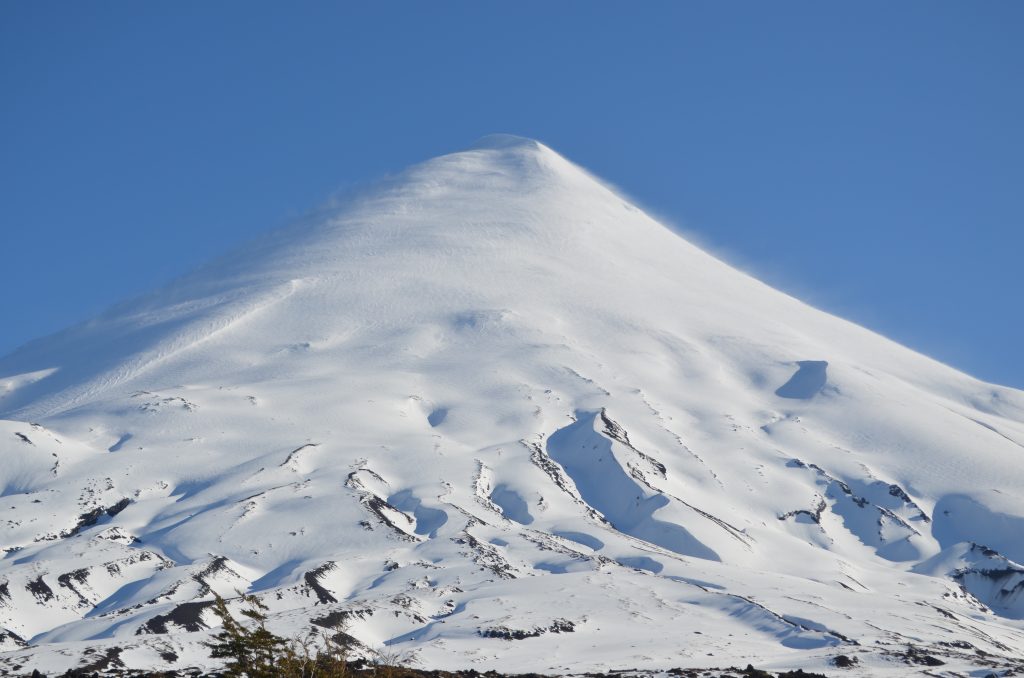
Rising 2,652 meters above sea level, the Osorno Volcano dominates the landscape surrounding Lake Llanquihue with its perfect conical shape, often compared to Japan’s Mount Fuji. Dormant since 1869, it’s one of the most iconic climbs in southern Chile.
The ascent begins at the La Burbuja ski center (1,200 m), following a trail of volcanic ash and rocky slopes that test endurance and balance. The final ridge, ascending along the northwest flank, rewards climbers with panoramic views of Lake Llanquihue, the nearby Calbuco Volcano, and on exceptionally clear days, even the Pacific Ocean.
🔗 Full guide to climbing Osorno Volcano: Explore routes and tips here
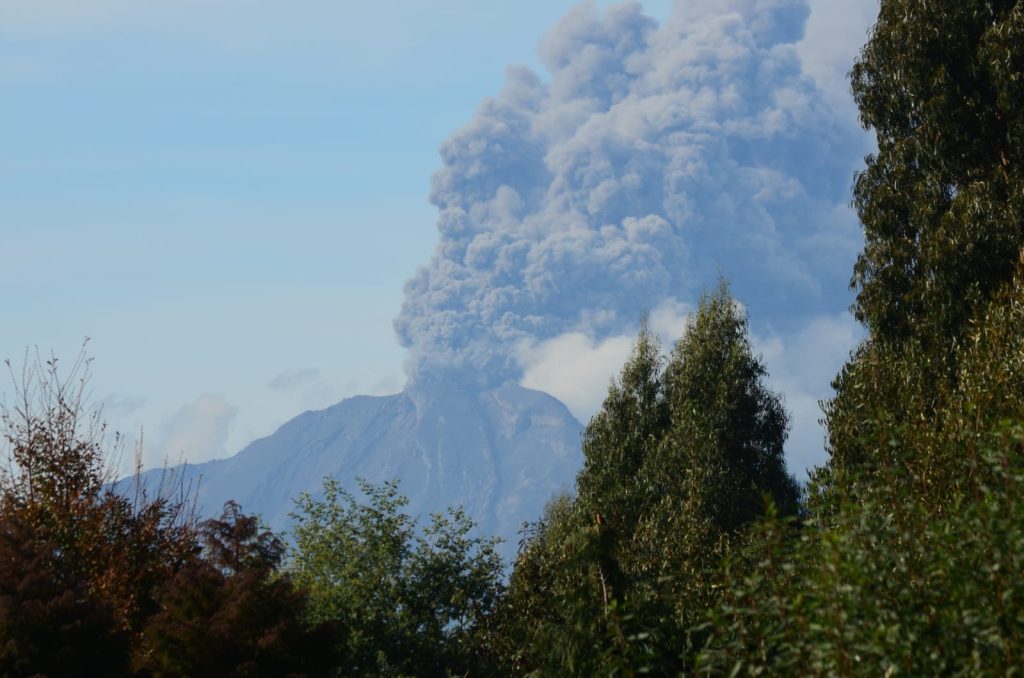
Just a few kilometers from Osorno stands the Calbuco Volcano (2,003 m), one of Chile’s most active peaks. Its violent eruption in 2015 dramatically reshaped its profile, altering established routes and raising the level of technical challenge.
The current ascent route begins at Lake Chapo, crossing areas still marked by the eruption. Climbers traverse regenerating forests, unstable pyroclastic terrain, and newly formed ridges. The final stretch demands climbing skills and specialized gear. Reaching the summit today means witnessing, firsthand, the raw power of the Earth in motion.
🔗 Climb Calbuco Volcano: Discover the route and safety recommendations
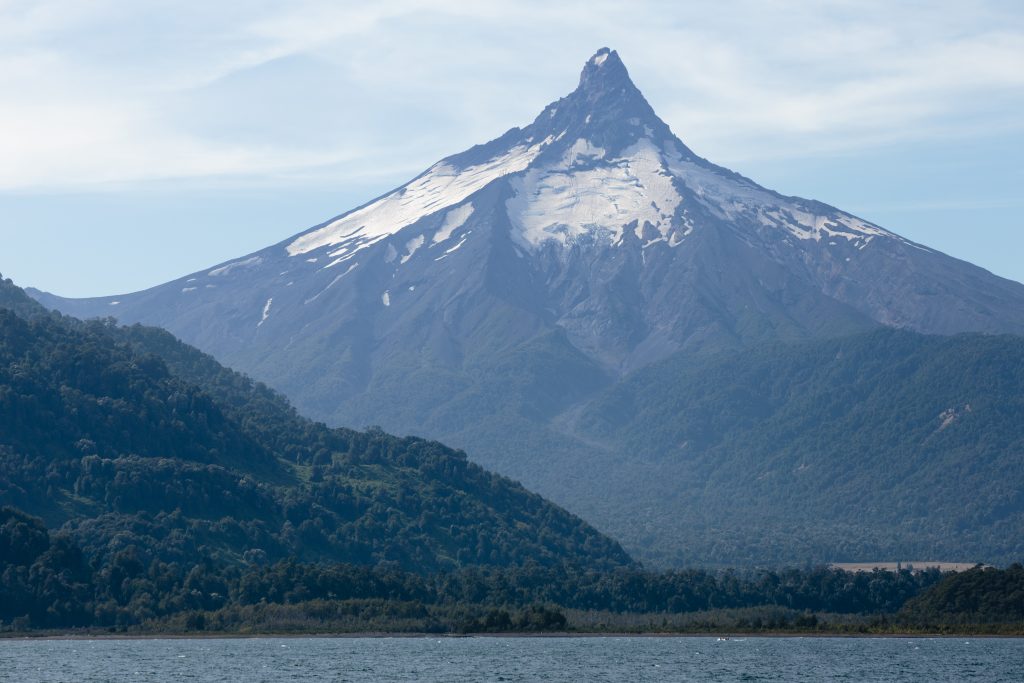
The Puntiagudo Volcano (2,498 m) is regarded as the most technically demanding ascent in the Lake District. Its needle-like summit, carved by centuries of erosion, requires expertise in both rock and ice climbing.
The route from Vuriloche leads through pristine forests and steep rocky gullies before a final exposed climb to the summit. The panoramic views — stretching across neighboring volcanoes and the Patagonian Andes — make it one of the most rewarding challenges for experienced mountaineers.

At 1,990 meters, Casablanca Volcano is an excellent choice for beginners or those seeking a moderate adventure. Starting from Antillanca Ski Center, the trail offers gradual slopes, firm volcanic terrain, and a well-marked route to a wide, safe summit. Despite its accessibility, the vistas of Lake Puyehue and the snow-covered Andes are truly unforgettable.
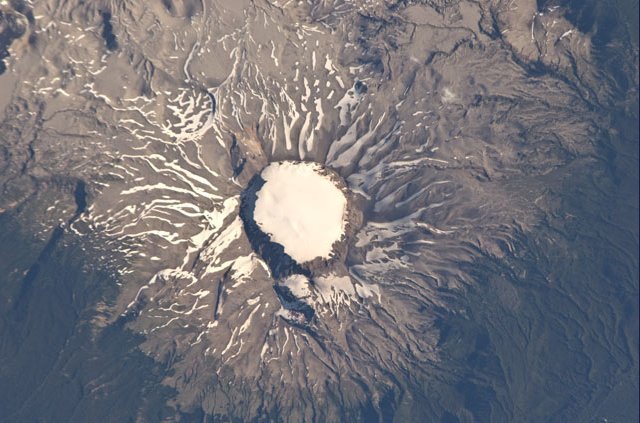
This vast volcanic system, last active in 2011–2012, is a constantly evolving natural wonder. The climb to Cordón Caulle reveals steaming fumaroles, recent lava fields, and newly formed craters — a living geology lesson set in one of Chile’s most dynamic regions.
Because of ongoing volcanic activity, climbers must check the latest safety updates with CONAF or local guides before any attempt.
Climbing in the Lake District demands good physical conditioning. A recommended training plan includes a mix of cardiovascular exercise, strength training, and weekend treks with a loaded backpack. Spending several days in intermediate-altitude locations like Puerto Varas or Ensenada helps with acclimatization.
Essential gear includes layered thermal clothing, waterproof outerwear, sturdy mountain boots, helmet, trekking poles, and a headlamp. For glaciers — such as on Osorno or Puntiagudo — add crampons, an ice axe, harness, and rope.
Responsible mountaineering begins with respect for the environment. Follow Leave No Trace principles: pack out all waste, stick to established trails, and avoid disturbing geological formations or wildlife.
Always check access regulations with CONAF and hire certified local guides to ensure safety and compliance with park regulations.
After conquering a volcano, there’s no better way to recover than soaking in the region’s natural hot springs. The Río Blanco, Geometricas, and Aguas Calientes hot springs are popular options for relaxation.
Complement your adventure with visits to Mapuche communities, sampling local cuisine in Puerto Varas, or exploring German colonial architecture in Frutillar.
The volcanoes of Chile’s Lake District are more than geological formations — they are living monuments to the Earth’s power and gateways to profound connection with nature. Each ascent, from the technical Puntiagudo to the iconic Osorno, represents not just a physical challenge, but a personal journey.
Proper preparation, respect for the environment, and guidance from experienced professionals transform these climbs into safe and unforgettable experiences.
The giants are calling.
Will you answer?

